

Edinburgh's tomb raiders and poltergeists - are you brave enough to explore the City of the Dead?
No bluidy peace! Edinburgh tomb raiders torment Sir George Mackenzie’s lost soul, while tourists are continually attacked by an enraged 'ghost'

If you’re planning a trip to Edinburgh as a tourist, you’ll find that among the top-rated things you should do when you get here is to go on a ghost tour. Follow that line of enquiry and you’ll undoubtedly find yourself touring Greyfriars Kirkyard, the City’s old cemetery.
Indeed, whenever anyone asks me what they should do when they visit my home city, I’ll tell them to pack warm clothes, book a ghost tour and be prepared to be scared witless. These tours are the best way to learn about Edinburgh’s real-life macabre history, some of its characters and to see some pretty ancient parts of the town. Greyfriars Kirkyard is one of many tour options, and is among the mostly highly rated.
P.S. - enjoying my posts? Please do me a favour and share this with your friends, family and Facebook groups you think may also enjoy them. Thanks! :)
The cemetery is home to a highly active spectral entity - said to be the unredeemable and demented soul of a man who is actually buried there. The spirit of Sir George Mackenzie, who is recorded to have physically harmed hundreds of people who have ventured too close to his resting place, is angry - and perhaps rightly so: modern-day tomb readers continually mess with his remains and, in the most recent case, someone decided to take a photograph for the world to see.
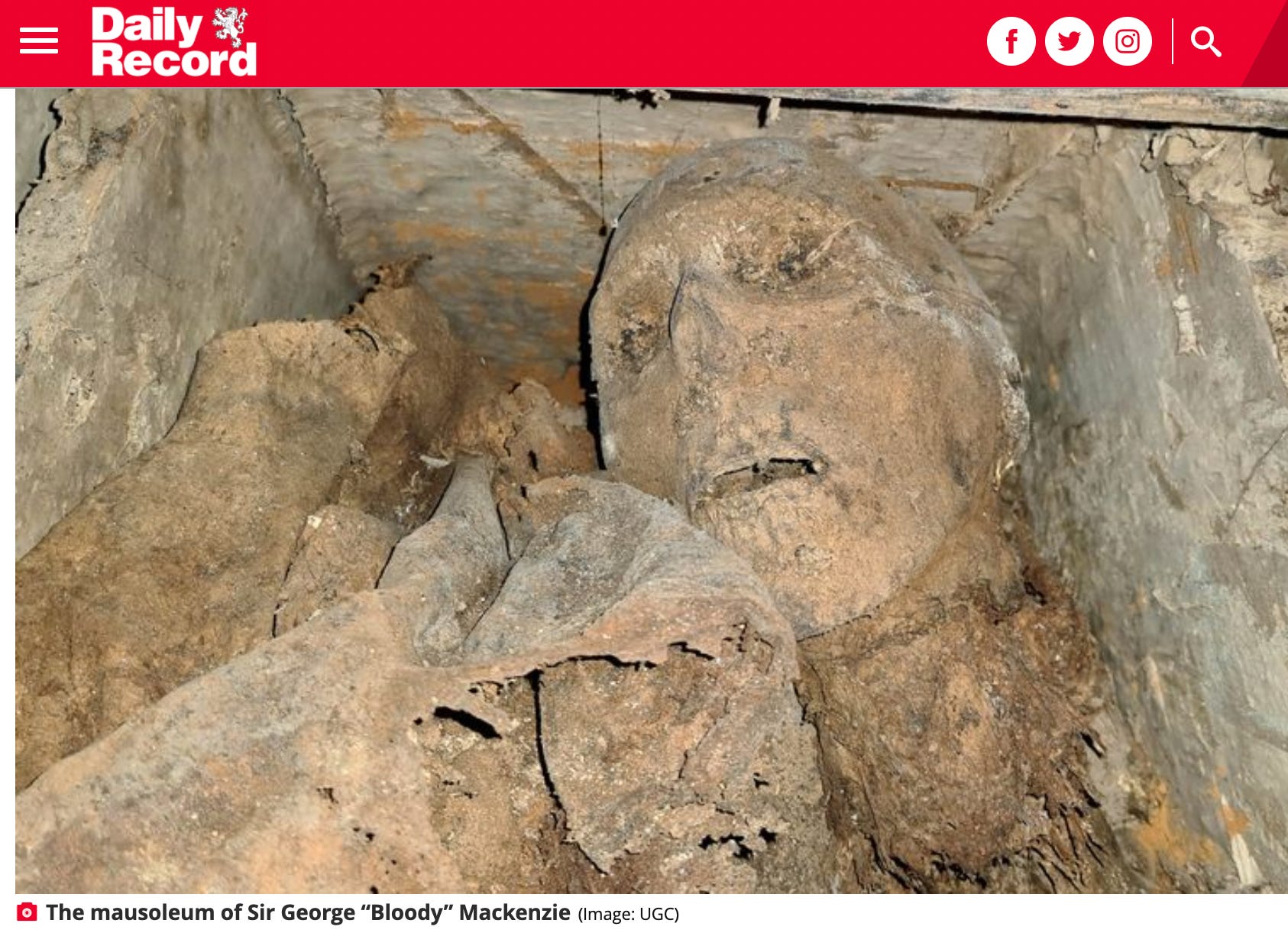
I’ll talk about this incident in a little bit. After all, it inspired me to write this post.
As with most of Scotland’s most famous ghosts, Sir George Mackenzie was a real man and, by all accounts, he was a really bad bastard. Among Edinburgh’s many bogeymen of history, he has never been allowed to rest in peace despite his violent acts of retribution.
Born in Dundee in 1636, he was appointed Lord Advocate for Scotland in 1677. He was empowered by the King of Great Britain to carry out prosecutions north of the border, and did so with all the bloodlust of a tyrant. One such task was to put down the Covenanter’s rebellion in 1679 - something he did in a brutal fashion, earning him the nickname ‘Bluidy Mackenzie’ among Edinburgh locals.
Following the battle of Bothwell Bridge, some 1,200 Presbyterian Covenanters were rounded up, brought to Edinburgh and were forced by Mackenzie into a squalid prisoner of war camp in a field right next to Greyfriars Kirkyard. Some were killed, while many others died through maltreatment.
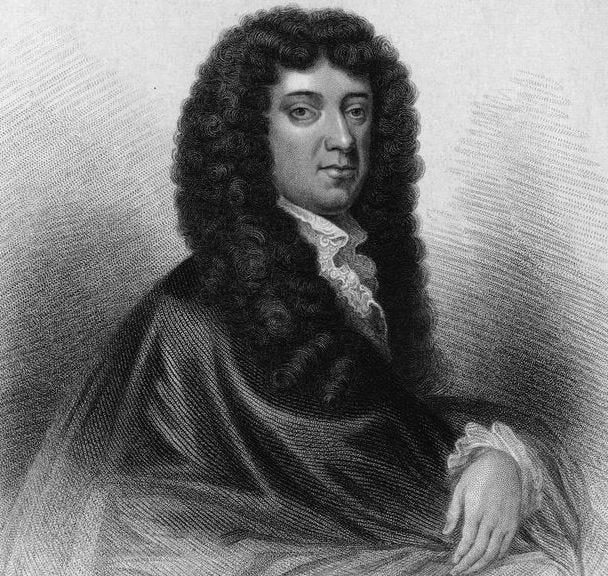
There are a great many details in between, and it should be mentioned that he is also recorded as having done good deeds in his role as Lord Advocate - including questioning the absurdity of witch trials.
Nonetheless, Scottish people love stories of underdogs against tyrannical villains. Consequently, Mackenzie will be forever known for his awful deeds against the Covenanters.
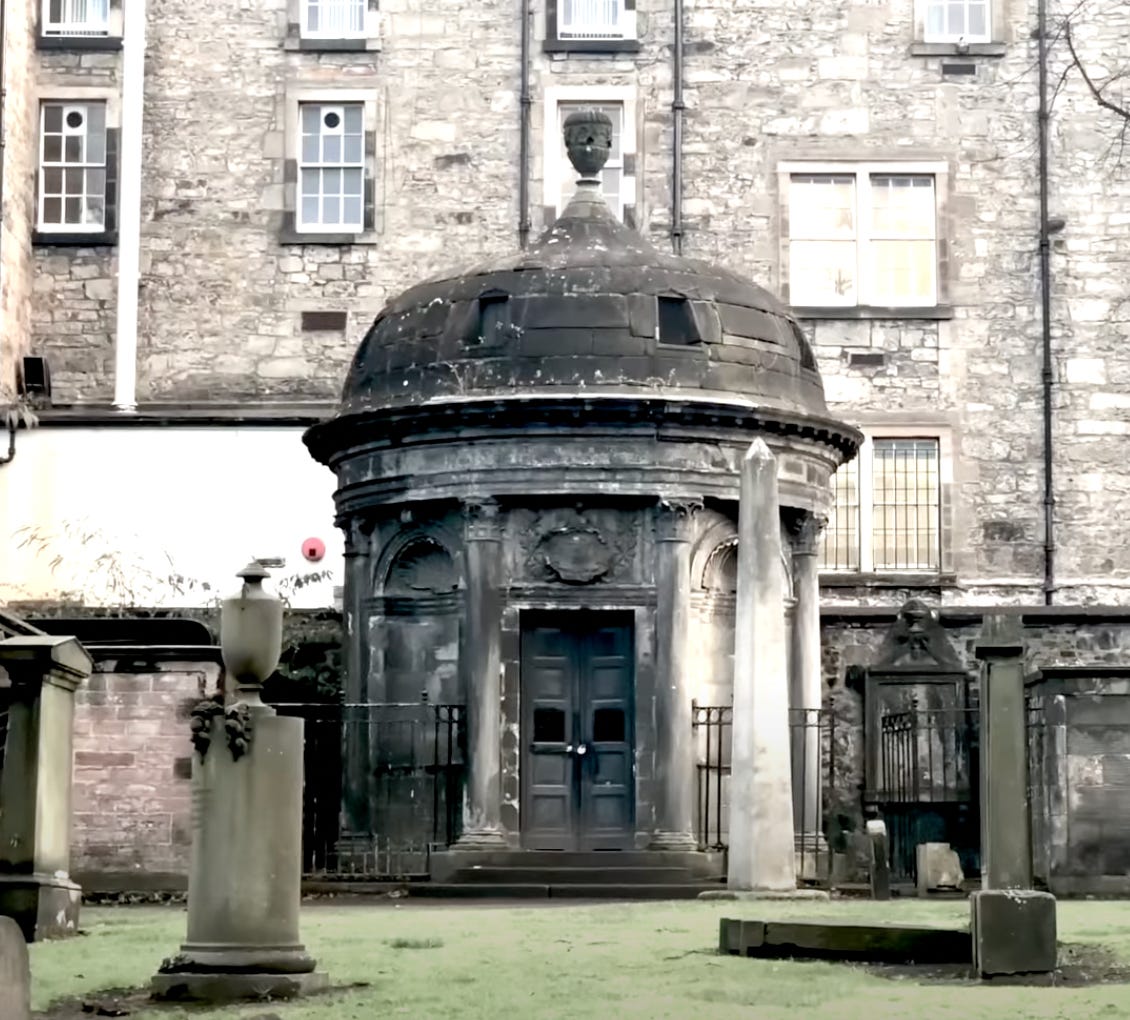
When Mackenzie died in 1691, he inflicted what many thought would be his final wicked deed. He had an enormous mausoleum built for his burial (pictured above), which was located around 25 metres away from the camp where the Covenanters were imprisoned and killed.
“Among Edinburgh’s many bogeymen of history, Sir George Mackenzie has never been allowed to rest in peace despite his violent acts of retribution.”
Retribution
While Mackenzie is long gone, his presence apparently lingers as an entity known as the Mackenzie Poltergeist - certified by experts in this arena as the most active and violent ghost in the world.
But it wasn’t always so. Sure, locals have always messed with Mackenzie. School children even used to dare each other to recite a poem at the gates of his mausoleum. It went: Bluidy Mackenzie, come oot if ye daur, draw the sneck and lift the bar.
Hundreds of years passed almost without incident. That was, until Mackenzie’s resting place was disturbed on the first of several occasions.
As the story goes, some time in the mid-1990s, a homeless man was seeking shelter in Greyfriars during a storm. He broke into the Mackenzie mausoleum and immediately fell through the rotten floorboards and into the crypt below, where he disturbed Mackenzie’s coffin and skeleton. Incidentally, the hole he created can still be seen today.
From that moment on, those who visited the graveyard started to feel a dark presence, as if they were being watched. Then the attacks started. People began to get scratched across their backs, legs and arms, with real bloody scars left on their skin. Unexplainable bruises also started to appear, and some people were even knocked out entirely.
Things came to a head in 1999 when Colin Grant, a local clairvoyant, decided to perform an exorcism at Greyfriars. Witnessed by several people, including a reporter for the Edinburgh Evening News, a strange dark shape seemed to move among them as he was conducting his sermon. It was even captured in a photograph (below - behind Grant in the church window) by Susan Burrell, a photographer for the paper. Colin Grant then mysteriously died a few months later while performing a seance.
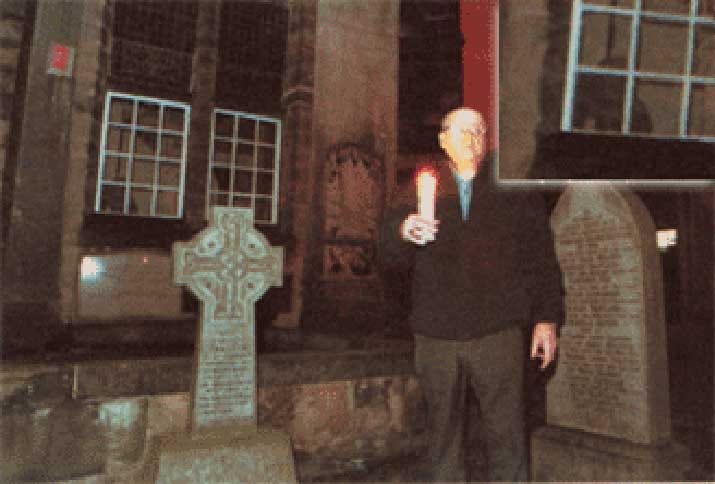
The ghost hunters were convinced: an evil spirit was responsible, and it was Sir George Mackenzie.
The legend of the Mackenzie Poltergeist was born, along with the City of the Dead tour company, which gained exclusive rights to provide tours of the Greyfriars Kirkyard.
Since then, hundreds of thousands of people have visited the kirkyard and the Covenanters prison - a location where the attacks are said to be most frequent. Indeed, City of the Dead keep a book of photographs that guests have sent them with evidence of the various wounds they have received following their visit.
» Read this book about Scotland’s famous ghosts «
Tomb raiders
You’d think that with such a body of evidence, nobody would want to go near Mackenzie or his mausoleum ever again, right? Not so!
One night in 2004, a pair of teenagers were messing around in Greyfriars, when they decided it would be funny to try to break into Mackenzie’s mausoleum, and then decided it would be even funnier to break open his coffin. If that wasn’t bad enough, they inexplicably ripped Mackenzie’s skull from the rest of the skeleton and took it out into the graveyard’s grass, where they then decided to use it as a ball in the most grizzly game of football ever.
The boys were caught by a tour guide who informed the police. They were charged and convicted under an ancient law that was designed to convict grave robbers which used to frequent Edinburgh’s cemeteries hundreds of years ago. It was the first time for over a century that anyone had been accused of ‘violation of sepulchre’.
The punishment for this crime would have been excommunication to the convict colony of Australia, but since such a punishment would seem slightly outdated, they received probation instead. Mercifully, with the absence of camera phones in the early 2000s, we are spared from this ghoulish kick-about being a viral hit on TikTok.
The haunting apparently intensified, with a continual stream of tourists being attacked by Mackenzie in the following years.
You’d think that nobody would be foolhardy enough to disturb his grave for a third time, but this is Edinburgh, and we live for this kind of thing.
As has been reported by several news outlets including the Daily Record, in a strange mixup, the Edinburgh City Council sent the keys to the locked Mackenzie mausoleum to the tour guide company.
Can you see where this is going?
One of the tour company’s employees thought the most appropriate thing to do with these keys would be to open the mausoleum and search for Mackenzie. A corpse/skeleton was found, and they then decided that the whole world needed to see it as well, so they took a photograph.
Call me a skeptic, but this would seem like the best publicity stunt ever for those who provide Greyfriars tours.
Despite the many attacks of the years, and even, apparently, a death, people are not scared of Mackenzie. In fact, the more weird things that happen, the more that people want to visit. Regarding the image of Mackenzie’s corpse/skeleton, a couple of things surprise me.
Now, I’m no mortician, but the first thing I find odd is how remarkably well preserved the corpse/skeleton seems, given that Mackenzie has been dead for hundreds of years.
Second, and perhaps more odd, is that I find a striking resemblance between the corpse of Mackenzie and the main villain in Harry Potter, Lord Voldemort.
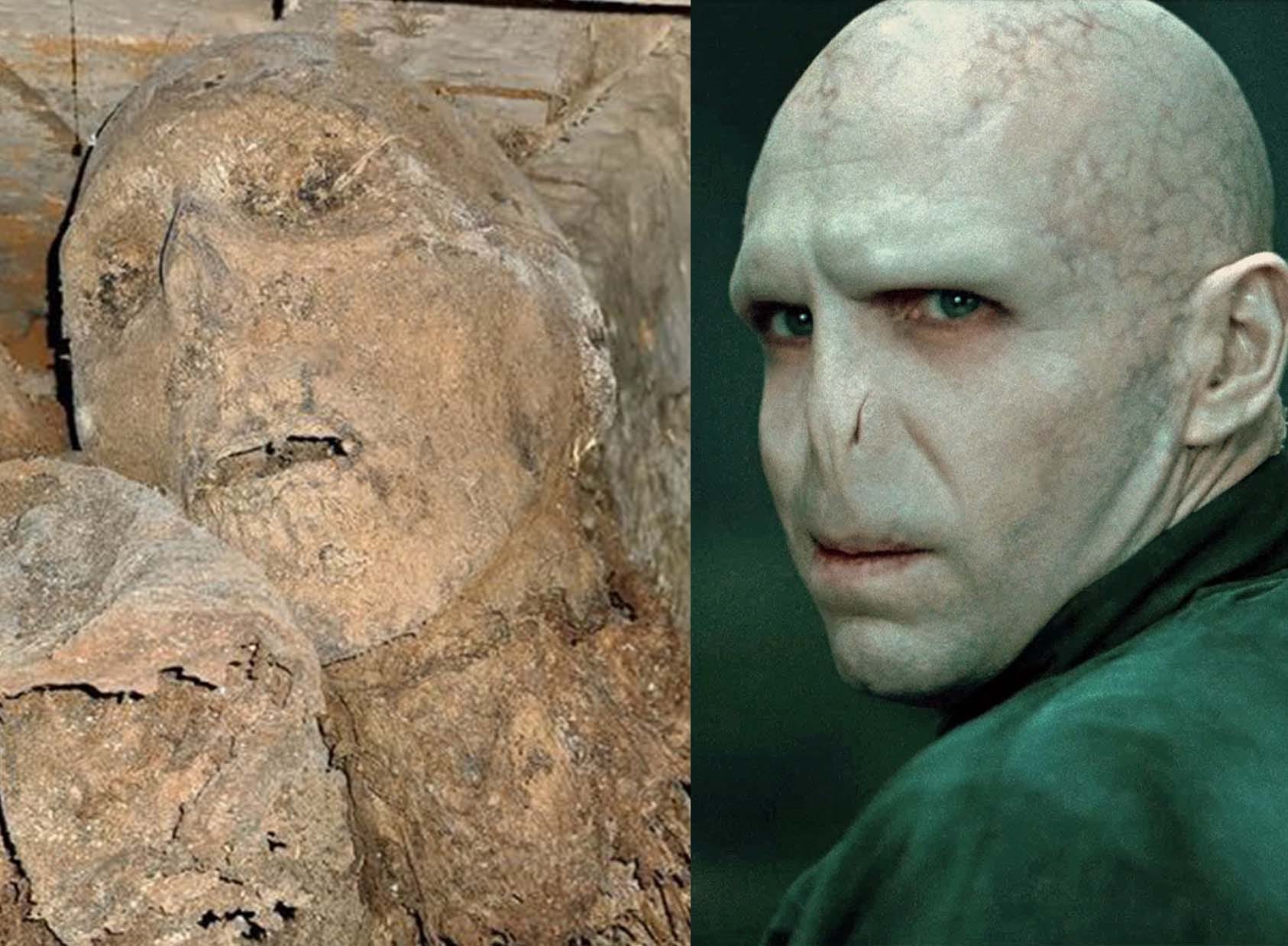
What makes this particularly strange is that JK Rowling got much of her inspiration for Harry Potter character names from Greyfriars Kirkyard. In fact, Lord Voldemort - real name Tom Riddle - was one of the names she plucked directly from a grave stone in the cemetery. Coincidentally, City of the Dead also run Harry Potter tours at Greyfriars.
Are you ready to brave Edinburgh?
As mentioned, a lot of people ask me what they should do in Edinburgh. I genuinely recommend you book a City of the Dead tour and experience the terror of being locked in the Covenanters prison at night. I guarantee, it’s an experience you won’t soon forget, regardless on your views on the paranormal. There are several other excellent and worthwhile ghost tours to do in Edinburgh. You must visit the underground vaults, while Mary King’s Close is also a great option.
The Mackenzie phenomenon is unexplainable, but also something I have direct experience of. I have shot several videos for YouTube at Greyfriars, which I’ll share below. On one occasion, I was filming with my dad, my sister, and our friend Amy, who enjoys paranormal investigations. My sister decided to sit on the outer rim of the mausoleum as we filmed. When we got home, she was full of scratches that she couldn’t explain.
With that and my videos on Scottish ghosts, I’ll leave you to draw your own conclusions.
One of the many things I didn't even know about when I visited Edinburgh. Just giving me another reason to visit again.
Very thorough and interesting take on the "Bluidy Mackenzie." I now regret not doing a ghost tour when I visited Edinburgh.